このページは機械翻訳によって英語から日本語に翻訳されました。 英語のオリジナルをご覧ください。

神経科学者、生物学者、およびアクティブインファレンスを通じて神経系を理論的にアプローチすることに興味を持つ理論家たち。

理論神経生物学グループ

アクティブインファレンスコミュニティ内で神経生物学の理論議論とモデル開発を支援します。

次の最適な行動

理論神経生物学グループ経路

このページの最もシグナルの強い公開リンクから始め、関連リソースとディレクトリのビューに進みます。

The Theoretical Neurobiology (TNB) Group has fostered interdisciplinary research and collaboration for decades. Its mission is to advance the understanding and application of active inference — the theoretical framework developed by Prof. Karl Friston — through regular online meetings featuring presentations and discussions that may include empirical data and analysis, simulations, and mathematical development. The group welcomes contributions from neuroscience, mathematics, machine learning, psychology, philosophy, medicine, and biology.

Objective

The TNB Group has been fostering interdisciplinary research and collaboration for decades. Its mission is to advance the understanding and application of active inference, the theoretical framework developed by Prof. Karl Friston. This is achieved through regular online meetings featuring presentations and discussions, which may include empirical data and its analysis, simulations, and mathematical development. The group welcomes contributions and perspectives from diverse fields, including neuroscience, mathematics, machine learning, psychology, philosophy, medicine, and biology.

Recordings

Recordings of past meetings, organised by research area, can be found on the TNB YouTube channel. The group is gradually adding more videos from its archive alongside recently recorded sessions.

Meeting Details

Meetings run on Mondays and Tuesdays at 2:30 pm UK time, lasting about two hours: roughly a 40-minute presentation, 40 minutes of Q&A, and 40 minutes of discussion and feedback with Prof. Friston. They are held weekly on Zoom, and the meeting link is sent via the mailing list — email theoreticalneurobiology@gmail.com to join.

参加方法

Meetings are open to researchers, students, and professionals worldwide. With no membership fees, the group provides a relaxed, no-pressure environment for engagement — whether through active participation or as an observer — and you are welcome to join any session that interests you. To join the mailing list for updates on upcoming presentations, active inference events, or job opportunities, or to request to present your work, email theoreticalneurobiology@gmail.com. Please note that presentation slots typically book two to three months in advance.

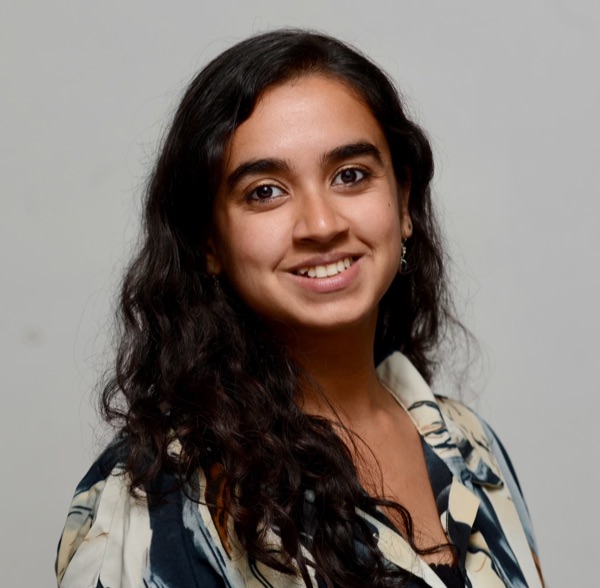
Riddhi J. Pitliya

Chair — Riddhi J. Pitliya, PhD

Riddhi's research focuses on active inference, human cognition, and multi-agent systems. She completed her PhD at the University of Oxford, where she investigated how individuals infer causal structure and agency in multi-agent environments, particularly across the depression spectrum — finding that depressive symptoms are linked to reduced sensitivity to inhibitory causal relations, reduced perceptions of agency, and a tendency to engage in frequent but less goal-directed actions when learning about causal structures. She now works at VERSES in the Intelligent Systems Lab, developing computational models of theory of mind that leverage active inference to facilitate collaboration and competition among multiple agents.

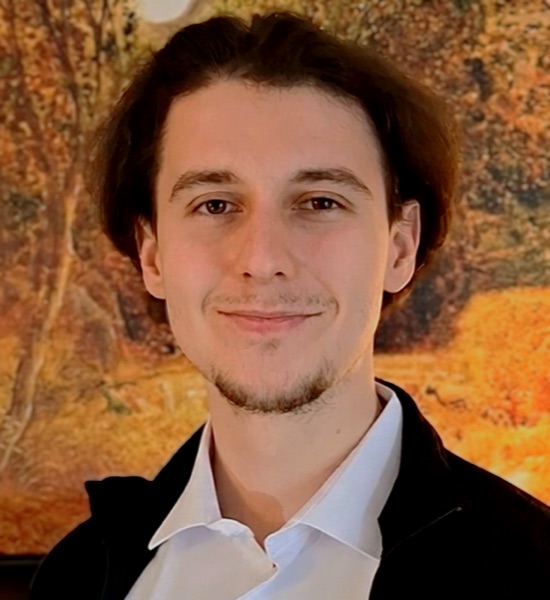
Peter Thestrup Waade

Chair — Peter Thestrup Waade

Peter's research focuses on computational cognitive modelling of multi-scale social interaction, particularly from the perspective of active inference and predictive processing. He did his PhD with Chris Mathys at the Interacting Minds Centre at Aarhus University and is starting a postdoc at the Translational Neuromodeling Unit at ETH Zürich with Klaas Stephan. He develops Julia software for cognitive modelling in general, the Hierarchical Gaussian Filter, and active inference with POMDPs, and also works in consciousness research, on joint action in partner dancing, and on Chinese philosophy and predictive processing.

Robert Chis-Ciure

Chair — Robert Chis-Ciure, PhD

Robert is an ERC postdoctoral research fellow in Anil Seth's lab at the University of Sussex and the Sussex Centre for Consciousness Science. His research focuses on formalised notions of emergence and computational neurophenomenology, using hybrid predictive coding and active inference formalisms to model phenomenal properties of experience and validate them experimentally — building toward a new methodological paradigm, Phenomenomics, to characterise the inner worlds of human and eventually all other observers, including by leveraging AI/ML on large-scale datasets. Before Sussex he was a Fulbright postdoc at NYU under David Chalmers, a Tatiana Foundation postdoc in Georg Northoff's lab, and worked in Giulio Tononi's lab on consciousness at the intersection of philosophy, neuroscience, and computational modelling. He is also an affiliated researcher at the Wolfram Institute.

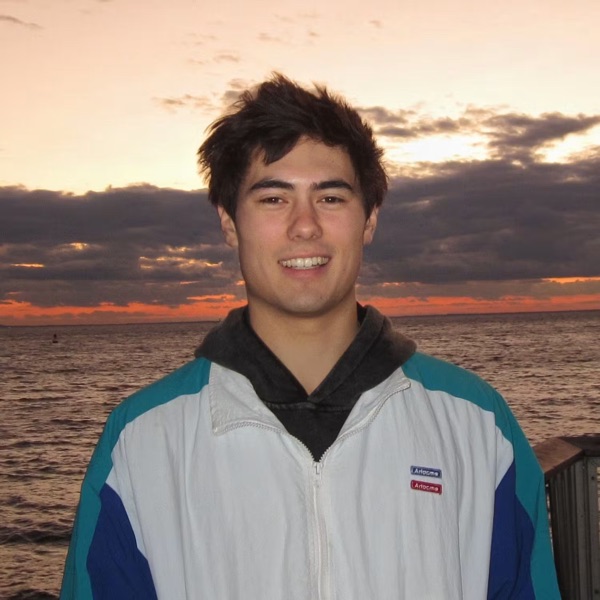
Will Yun-Farmbrough

Chair — Will Yun-Farmbrough

Will is a PhD student at the Sussex Centre for Consciousness Science, supervised by Anil Seth and Chris Buckley. His research investigates how perceptual phenomenology in human subjects can constrain and inform predictive coding models of cortical processing — the algorithmic underpinnings for how our world appears to us. He is also interested in predictive processing approaches to the meta-problem of consciousness, seeking to understand how intuitions of conscious experience and qualia might arise naturally in certain generative model hierarchies. He enjoys surfing, houseplants, and zen.

Jonathan Ehrenreich Laursen

Chair — Jonathan Ehrenreich Laursen

Jonathan is a Master's student in Neural Systems and Computation at ETH Zürich and the University of Zürich, where he works on developing cognitive modelling software in Julia. He is interested in using computational tools to understand psychiatric disorders and how they might become relevant for clinical practice. Beyond his studies, he is an avid reader of history and philosophy and enjoys spending time outdoors.

Samuel William Nehrer

Chair — Samuel William Nehrer

Samuel is a Master's student at the Institute of Neuroinformatics, a joint institute of ETH Zürich and the University of Zürich. He completed his undergraduate studies in Cognitive Science at Aarhus University, where he began developing Julia implementations of active inference models for cognitive modelling. He is interested in combining computational modelling of human behaviour with brain imaging to address how psychedelics modulate hierarchical inference, cognitive flexibility, and belief updating at the algorithmic level, and how the ensuing computations are implemented in brain networks. He is also an aviation enthusiast and enjoys thinking about fundamental questions in physics and the philosophy of mind, as well as exploring the Swiss mountains on foot or by bike.

Work in Progress

The group is compiling a comprehensive Repository of Active Inference Resources — introductory materials, research papers, and tutorials, all categorised for easy navigation. It is also planning Joint Research Symposia with other research communities to strengthen cross-community interaction and collaboration.

キーの表面

一瞥理論神経生物学グループ

Weekly meetings

Mondays and Tuesdays, 2:30 pm UK time on Zoom — presentation, Q&A, and discussion with Prof. Friston.

TNB YouTube channel

Recordings of past meetings, organised by research area, with archive videos added over time.

Present your work

Open to researchers, students, and professionals worldwide. Presentation slots book two to three months ahead.

関連リソース

このページの公開リンク

外部リンクは共有レジストリから解決されるため、訪問者向け目的地は中央集権的かつ確認可能な状態が保たれます。

Repository / Projects

GitHub organization

Audience: Developer

Public GitHub organization for Institute repositories and open-source work.

projectsgithub-org
Repository / Projects

GEO-INFER repository

Audience: Developer

Geospatial modeling repository connected to ecological and bioregional applications.

projectsgeo-infer

公式ページ

公式インスティテュート表面

リポジトリ

関連するオープンソースリポジトリ

Repository / Research

act_inf_metaanalysis

Audience: Researcher

Computational meta-analysis of Active Inference literature with nanopublication and knowledge-graph outputs.

TeX / 4 stars / updated 2026-05-04

researchknowledgetex
Repository / Research

Active_Inference_Ontology

Audience: Researcher

Ontology-oriented repository for shared Active Inference concepts and decentralized science knowledge infrastructure.

Unspecified / 14 stars / updated 2026-05-18

researchknowledgeunclassified
Repository / Projects

ActiveBlockference

Audience: Developer

Notebook-based applied Active Inference work connected to blockchain-adjacent and generative modeling examples.

Jupyter Notebook / 33 stars / updated 2026-05-27

projectrepositoryjupyter-notebook
Repository / Projects

ActiveInferAnts

Audience: Developer

Python models and materials for ant-inspired multiagent Active Inference.

Python / 29 stars / updated 2026-05-18

projectrepositorypython
Repository / Research

AEOS

Audience: Researcher

Active Entity Ontology for Science

Unspecified / 8 stars / updated 2025-05-27

researchknowledgeunclassified
Repository / Projects

ants

Audience: Developer

Public ants repository in the ActiveInferenceInstitute GitHub namespace.

Unspecified / 0 stars / updated 2021-08-29

projectrepositoryunclassified